Say (O Muhammad SAW): "O mankind! Verily, I am sent to you all as the Messenger of Allâh — to Whom belongs the dominion of the heavens and the earth. Lâ ilâha illa Huwa (none has the right to be worshipped but He); It is He Who gives life and causes death. So believe in Allâh and His Messenger (Muhammad SAW), the Prophet who can neither read nor write (i.e. Muhammad SAW) who believes in Allâh and His Words [(this Qur'ân), the Taurât (Torah) and the Injeel (Gospel) and also Allâh's Word: "Be!" - and he was, i.e. 'Īsā (Jesus) son of Maryam (Mary), A.S.], and follow him so that you may be guided."
(Qur'an: A'raf: 7: 158)
-----------------------------------------------------------
Friday, September 27, 2013


Thursday, September 12, 2013
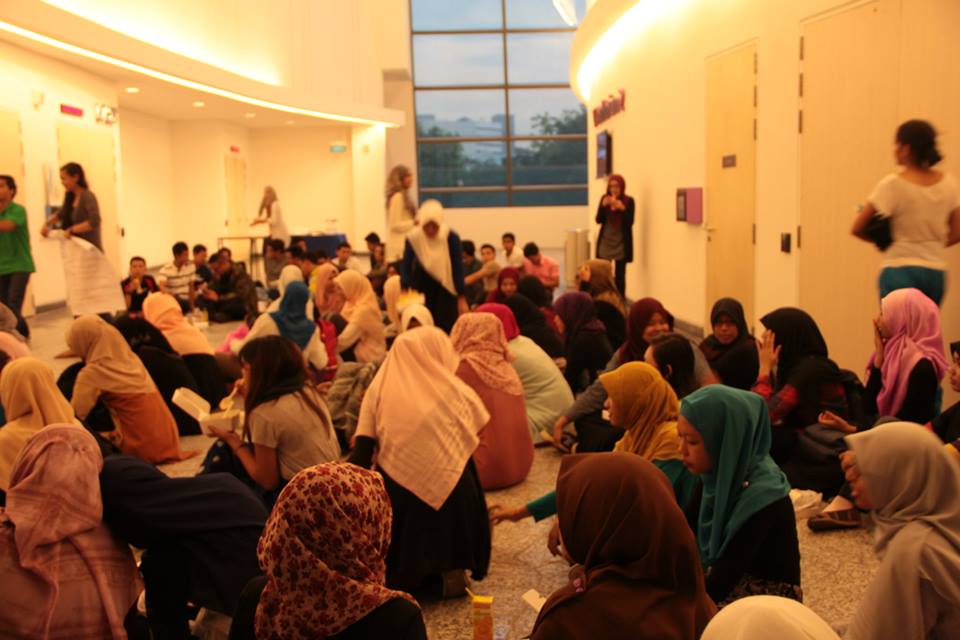
"Whither Thither?"- [NUSMS]-Workshop-MUS1101E-3 Sept 2013
AlHamdulillahi Rob-bil-'aa-lameen !
My appreciation to the organizer NUSMS, undergrads and participants for the invitation - indeed a most welcomed opportunity to serve the ummah - may Allah SWT be pleased and grant us all knowledge and wisdom with His Mercy (Rahmah). j
Jazaakumullaahi khay-ra al-jaza'
”All praise be to Allah Who has guided us on to this. Had it not been for Allah Who granted us guidance, we would not be on the Right Path.”
My appreciation to the organizer NUSMS, undergrads and participants for the invitation - indeed a most welcomed opportunity to serve the ummah - may Allah SWT be pleased and grant us all knowledge and wisdom with His Mercy (Rahmah). j
Jazaakumullaahi khay-ra al-jaza'
”All praise be to Allah Who has guided us on to this. Had it not been for Allah Who granted us guidance, we would not be on the Right Path.”
======================================
Slideshare [nusms-2013]-on-being-muslim-series#1-(2-sept-2013) from Zhulkeflee Ismail


----------------------------------
REFLECTIONS FROM THE TALK
-------------------------------------
·
I learnt how the Malay culture (pantuns)
coincides a lot with religious teachings.
·
"Muslims
must not learn Islam as a subject but must learn to subject themselves to
Islam." This quote said by Ustaz had the largest impact on me and taught
me the importance of realising and hence acting upon the fact that Islam is all
encompassing in our life matters and is not a mere additional subject that is
of separate existence. That being said, I also realised that I have taken the
'simple' aspects of our religion such as tauhid, taqwa and even the salam for
granted as given, when they are huge concepts that can't be taken at face value
and memorised as definitions in a subject.
·
Our
responsibilities, fardhu ain, changes as we grow older. it’s no longer
sufficient to understand islam/the world at surface level. must seek deeper
understanding.
·
We are firstly muslims before we are anything else (student,
daughter, etc)
·
aim to be a human being that submits to Allah; we have to also put in effort in gaining
religious knowledge, not just the secular ones; don't drown in the life of this
world
·
In order to be a Muslim, it is necessary for us to go through
struggles, as only through struggles can we realise our utmost reliance on
Allah alone. And some of the struggles include pursuing knowledge, and to
always remember Allah in everything that we do (because of the fact that
mankind tends to forget)
·
the significance of knowledge especially for Muslims
- the importance of being a good Muslim with good manners etc
- the importance of being a good Muslim with good manners etc
·
The talk made me realize that in order to
acquire knowledge, we have to be sincere in receiving it. Often, I feel
inadequate as I lacked in so many areas academically. I often question myself
“why do I feel this way” or “how come I don’t know about it”. But now I realize
that the first step to acquire knowledge is when you realize you don’t know.
While realization is important, action has to be taken. As what Ustaz
mentioned, what we read, listen or see are mere information whereas
understanding knowledge comes through Allah’s will, if we put our souls into
it.
·
Another lesson I’ve learned was that as Muslims,
we have to be grateful for whatever Allah has given us. Allah has given us
countless of blessings, yet we humans are still ungrateful. As in human nature,
we tend to compare ourselves with someone whom we think is better than us. Most
importantly, we forget that Allah has given us the best blessing in this world
by giving us Islam. Therefore, we have to strive to be grateful to Allah for He
is our Creator and Provider.
·
Finally, we often regard the concept of success
as something worldly- be it academic achievement, wealth or material gains. We
forget that that eternal success comes in the hereafter whereas the world we
are living now is just a test, which we will be accounted for in the hereafter.
Therefore, while it is important to achieve success in this world, we also have
to strive to achieve true success in the hereafter.
·
Some quotes form the
talk
"Knowledge
of the world is at tertiary level but what about knowledge of your deen?"
“Faith without
obedience is meaningless”
“Obedience is
not merely a ritual”
“And ritual may
lead to hypocrisy so we must strive to overcome this”
"Muslims
must not learn Islam as a subject but must learn to subject themselves to
Islam"
·
Ustaz
share the benefits and significance of saying salam in its fullest form. Plenty
of blessings is accorded based on the degree of AS-Salam , the degree of
Allah’s rahmat and the degree of Allah’s barakah/blessing which clearly is
undefined to any makhluk. In this light, the doa through the salam is more than
a symbolic act of friendship amongst muslims that binds hearts together, it is
one of the reasons for Allah’s continuous blessings, goodness and mercy on
us. Allah is pleased with one who loves
his brother for the sake of Allah.
·
the
place of our parents in our lives. Out of the many factors that Ustaz could
have chosen to elaborate in his talk, he chose to talk about our duty to our
parents. So, all-encompassing is our duty that they should and can influence
our ambitions. This reminds me on how the great men of Allah have all been
great sons and daughters. Pleasing our parents is clear and sure way of
pleasing Allah. So, upholding them in our lives, ensures ourselves as
successful servants of Allah.
·
the
importance of knowledge in being a successful muslim undergraduate.
- Knowledge is defined as the arrival of meaning to the soul.
- One of the points raised under TAQWA, which is one aspect that we should be striving under, is to be aware of the consequences and thus, fearful of transgressing. This requires knowledge. Having the Quran as a source of guidance also requires knowledge. Overall, to live up to the total and perfect meaning of ad-deenul Islam requires knowledge from the reliable teachers.
-------------------
SNAP-SHOTS
-------------------




Sunday, September 8, 2013
"Who is truly upon the Creed and religion ABRAHAM a.s. ?"
As-salaa-mu 'alay-kum warah-ma-tullaah,
There are many messages in the Qur'an meant to be conveyed to People of the book. O Muslims! You must not neglect your duty to bear witness and convey these message to them .... no excuses please
“So if they believe in the same as you believe in, then they have been [rightly] guided; but if they turn away, they are only in dissension, and Allah will be sufficient for you against them. And He is the Hearing, the Knowing.”
... convey
There are many messages in the Qur'an meant to be conveyed to People of the book. O Muslims! You must not neglect your duty to bear witness and convey these message to them .... no excuses please
“O People of the Scripture (Jews and Christians), there has come to you Our Messenger (Muhammad) making clear to you much of what you used to conceal of the Scripture and overlooking much. There has come to you from Allah a light and a clear Book. By which Allah guides those who pursue His pleasure to the ways of peace and brings them out from darkness into the light, by His permission, and guides them to a straight path.”
(Qur’an: Maa-idah: 5: 15-16)
“Say: "O followers of earlier revelation! Come unto that tenet which we and you hold in common: that we shall worship none but Allah (God), and that we shall not ascribe divinity to aught beside Him, and that we shall not take human beings for our lords beside Allah (God)." And if they turn away, then say: "Bear witness that it is we who have surrendered ourselves unto Him ( AL-MUSLIMUN ).”
(Qur’an: Aali ‘Imran: 3: 64)
(Qur'an: Baqarah: 2: 135 )
... convey
----------------------------------
Alhamdulillaah ! just elivered this for Filipina Muslim converts
[Slideshare] tadzkirah-sept -2013-remember-prophet-ibrahim-(al-baqarah-127-141)-8 sept-2013 from Zhulkeflee Ismail

Monday, July 29, 2013
[Powerpoint]- Mabuhay Club’s Ramadhan 2013 Tadzkirah -"Enhancing Our Connectedness with the Divine in our Life" (Part 1 & Part 2) - reflection
· Mabuhay Club’s tadzkirah (RAMADHAN 2013)
- Enhancing Our Connectedness with the Divine in our Life (Part 1 & Part 2)
------------------
REFLECTION
------------------
Bismilahirrahmanirrahim.
Alhamdulilllah. Am grateful for the ability
to attend lessons during Ramadhan.
I was just pondering about the impact of
attending these lessons and I think it was extremely useful because each week
was like a stock-check: “Ok – how have your Ramadhan been?!” It made me ponder
about:
1)
The
significance of Ramadhan in my life
2)
How much
have I been striving?
3)
This
Ramadhan with retrospection to the previous ones
4)
Looking
forward – Post-Ramadhan
1) The
significance of Ramadhan in my life or My Relationship with Ramadhan
I learnt that I really didn’t know Ramadhan
that well in the first place. Relating this to a marital relationship (as how I
usually remind newly-weds & to-be-married couples in my line of work), I
learnt that we’ve got to keep an open-mind and a lifelong learning attitude.
For e.g., Discovering Ramadhan’s “pet names”
(nama gelaran or nama manja I’d like to think), helps me understand Ramadhan
from a different light. In similitude, like a couple, it reminds me not to be
complacent just because one’s married; In this case, just because I’m a Muslim
who fasts in Ramadhan, doesn’t mean I know what Ramadhan is all about. Also as
Ustaz mentioned in the public lecture, sometimes the meanings we make out of
the information could be faulty – or misconceptions – and thus, we need to seek
the meanings that Allah had wanted us to find.
And these meanings are aplenty… and deep! I
am reminded not to under-perform, not to
focus on Hari Raya & not to be swayed by the
distractions/commercialisation of the festivities. I felt what was needed – was
discipline & a paradigm shift in my beliefs. These “walls” must be
understood in its context of a shelter, a protective feature and a place of
comfort – it should be a home, not a prison.
Ramadhan is the most glorified month for the
believer – a month of submission, purification, putting us to the test,
standing in prayer, the month where Qur’an was sent down and also… like Ustaz
shared later – Ramadhan is the EID of the ‘Awliya of Allah (literally
"Intimate Friends - Wali of Allah") (I was thinking to myself… wah bestnya. Eid for one month! I pun nak…!
Hahaha) That confirmed my ignorance to what Ramadhan had been!
SubhanaAllah! Such a beautiful gift!
And to recognise that all the things we do –
has a link back to the legacy of Rasulullah (saw)! It is not in isolation or a
new crafted objective. We have this responsibility to carry – and may we be
granted the ability to do so, in whatever capacities we may have. And this is
what bearing witness to Tauheed is about.
I was also deeply intrigued by the divine
spectacle of Ramadhan delivered at the NTU VSS talk, which also drove home the
point that about our roles as witnesses, which brings me to my next point.
2) How
much have I been striving?
Ustaz highlighted so many gems in the
lessons, it’s quite ‘difficult’ (err… I
mean, it takes a bit more of brain processing time but not impossible) to
string them all together. Though one thing that I felt was a strong message in
the first tazkirah for the mabuhay session was about our efforts to respond to
Allah. In the beginning of the lesson, Ustaz already established that Allah
will definitely respond to us – that’s not the issue. He has already promised
us that – but the issue is – US. How have WE been responding to HIM?!
The Qur’an being the Guidance (Huda) for
mankind, the Bayyinat (explanation of the Guidance) & Furqan (to know truth
from Falsehood) – How have we been utilising the Qur’an and the month of
Ramadhan to respond/jawab to Allah?! There were so many highlights on du’a and
swolah. Du’a being the marrow of ‘Ibadah, Du’a itself being ‘ibadah.
MashaAllah! And at ALL times… to make du’a to strengthen this connection with
Allah swt. I am reminded to make du’a even & especially in times of ease,
for it is nobler in the sight of Allah. :)
3) This
Ramadhan with retrospection of the previous ones
Has this Ramadhan been better than the last?
What helped me make it better? Can I do more of what’s working for me? Reflecting
upon my previous Ramadhans… I think this year has been much better. Not that
it’s fantastic (could always be better right?)
Yet what I love and am thankful for is that
I’m keeping with a few goals now. ALHAMDULILLAH! ‘Cause when Ramadhan started
out this year, I had set a few goals for myself – not gigantic ones; I chose
simple routines – but it has to be done extremely consistently with no excuses
(no matter how tired, no matter how lazy, no matter how late I reach home, no
matter how sick). Bi idznillah. And ALHAMDULILLAH for Allah’s guidance and
bestowal of achievement so far.
Past years had been a lot of wanting, but
less doing. And sometimes, messed-up prioritising. I think it really reflects
my ignorance of Ramadhan, hence such ‘outcomes’… Bleah. I can sense small positive
shifts this year so far Alhamdulillah. May every Ramadhan be a better one than
the last!
It’s true ya when Ustaz mentioned in Qur’an:
al-Baqarah: 185 that Allah intends for us ease – it’s just that we never truly
believed. We saw the other side, which is hardship. How myopic and erroneous a
view! When Ustaz outlined what can help us see it as a facility – beginning
with firm resolve (and niyyat), having husnudzonn, tawakkal & swobr towards
Allah swt, having firm faith of Allah’s reward, being grateful for small &
daily successes, striving to be ikhlasw & avoiding riya’ and understanding
that Allah is the ultimate Judge! This was pointing to an attitudinal change of
how we have been looking at Ramadhan.
4) Looking
forward – Post-Ramadhan
With whatever I am able to do now – I ask
myself if I’m able to maintain it post-Ramadhan. With all the striving done in
Ramadhan, how do we move on from here?
I was also sharing with a beloved sister
about Ustaz raising the point on making a habit to recite 40 times (of a
verse), so it becomes inscribed in our hearts and that’s
the traditional way of remembering/memorisation! And then suggesting that a
month of submission and striving with much ‘amal ‘ibadah is supposed to drive
in a similar impact. And that’s how our submission is built.
And so – I have this idea that above and
beyond the 30 days – I think I should strive with similar routine from the one
I’ve created in Ramadhan for another 10 days at least in Syawal… and hopefully,
this ‘amal will be inscribed in my heart too! In the hope that Allah makes it easy
for me to ber’amal with istiqomah. Hee! Ok la, nanti lepas Eid nak try…
Indeed, when we learn to be grateful, Allah
will grant us more. And a true believer (mu’meen) is one who doesn’t complains.
And how we wrap up Ramadhan (this global, intergenerational,
intercivilisational, traditional, prophetic, life-changing ‘campaign’) is with
the clear united glorification of the One who truly guided us, without whom –
whatever we had intended or wanted can never materialise. SubhanaAllah Allahu
akbar!
I am deeply grateful Ustaz for your
persistent guidance that had helped me understand my role as ‘abdan shakur a
bit more. The renewed semangat to develop oneself is also something priceless
that I hope will aid me in my journey back to Allah swt. Jazakallah khayran
kathiran Ustaz and may Allah reward you and your family immensely for all the
numerous blessings you have showered upon us. Amin. :)
OK – Ramadhan! Final Lap! Alhamdulillah!
ANONYMOUS
-----------
Reference:
Reflections from Ramadhan’s other majlis ‘ilm (link):
Tuesday, July 23, 2013
(NTUMS) -"Being True Witnesses in Ramadhan" - 15 jULY 2013 @ Masjid Alkaff Kampong Melayu, Bedok Reservoir Road.

AlHamdulillaah! Just delivered this .. may it be beneficial towards our attaining the Redha of Allah. My thanks and appreciation to the NTUMS leaders, organizers, helpers, participants and all who supported this program, granting me the opportunity to serve Allah and His Messenger s.a.a.w, in upholding the legacy of al-Islam and for the betterment o this Ummah.
Jazaakumullaahi khay-ral al-jazaa'
May Allah azzawajalla grant us all, and all our beloved family and companions, the success (TAUFIQ) and the Guidance (HIDAAYA) to attain to His Acceptance, Forgiveness and Mercy (RAHMAH) and gain His Pleasure (MARDHA-TILLAH).
------------------------------------------
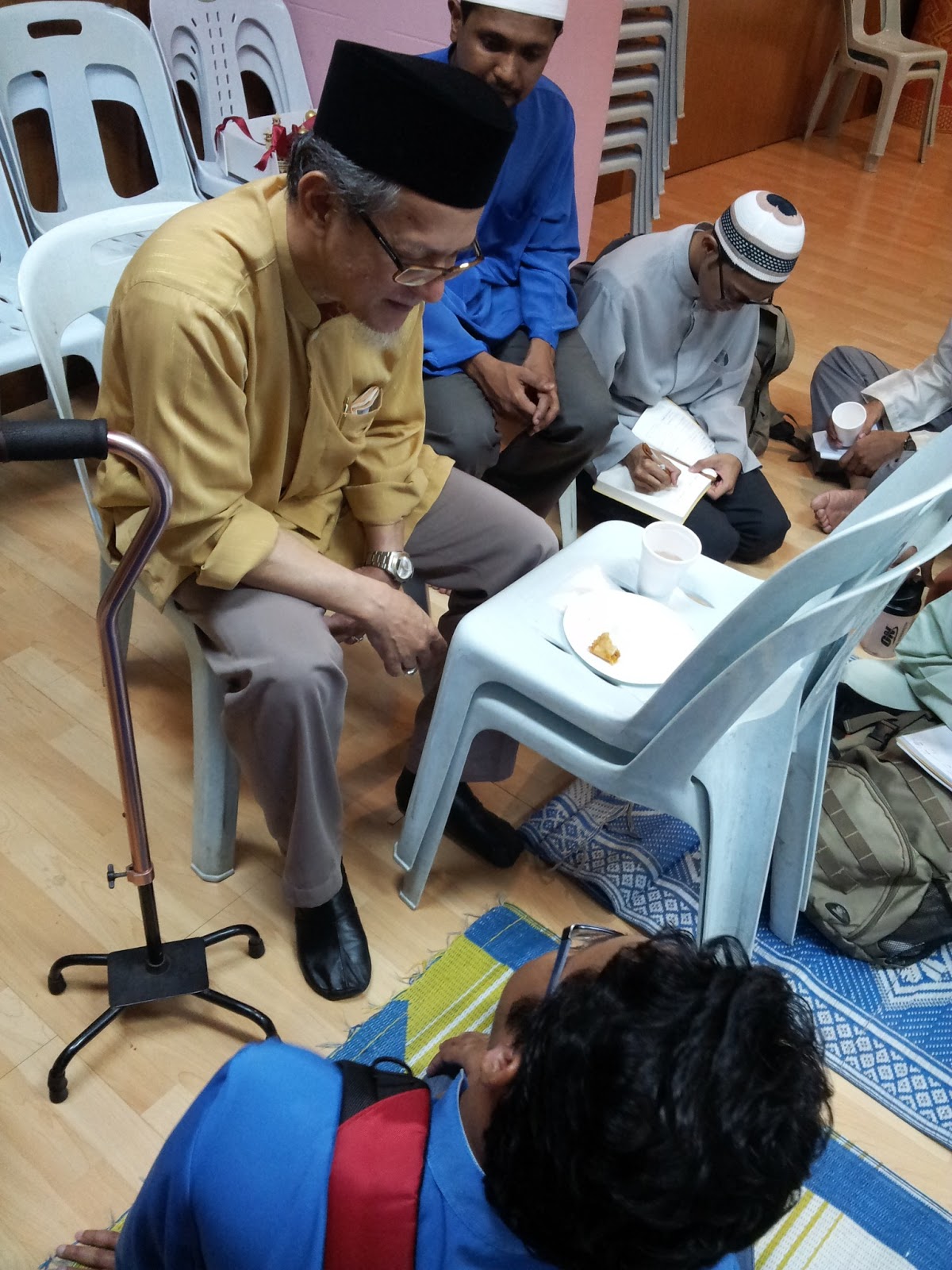
A post-lecture discussion-reflection
------------------------------------------




Thursday, July 18, 2013
"ISLAM: ... not to be reduced to any single racial groupings" - ( first posted - 2 August 2012 on my FB notes)
IN THE NAME OF ALLAH MOST COMPASSIONATE MOST MERCIFUL
Islamic civilization was the most cosmopolitan of human civilization ever evolved. Although the main lingua franca used for its spread was Arabic, its people's culture and racial make up are very diverse, such that the majority of the Muslims adherents and the people who helped build this civilzation (ethnically) are overwhelmingly non-Arab. Yes, it is problematic when people wrongly assume that this religion, referred to as “al-Islam” is an Arab religion and therefore whatever is “Arabic” is therefore Islam.
Lest we forget earlier Prophets were non-Arabs and their knowledge and wisdom, are the ‘lost treasures’ of the believers which we are commanded to seek them and to possess them wherever we may find. And without learning, understanding and appreciating other languages, even ancient ones, how could Islam have grown and spread?
Islam is only concern with conveying truth and ensuring the arrival to correct meanings, which does not mean we seek to replace all other languages with Arabic. It is not and should not be associated with "Arabization".
Yet being Muslims, in trying to express ourselves we tend to use Arabic terminologies. This may be misperceived as our being presumptuous when these terms may not as yet been adopted into “Malay”. Not that our Malay heritage lack these words, but it is only because we (or should I say) I, am lacking in the knowledge and the Malay vocabulary – (which may already be there from Sanskrit, Austronesia, Khmer. Tagalog, Pali, etc.), So, to me, any input that may increase my knowledge of my culture and heritage is very much appreciated. Often times knowing these adds to a profound realization of our reality.
Even the Arabic language (“Aamiyah”) as used by contemporary Arabs is not above criticism by Islam. Although Prophet Muhammad s.a.a.w. was Arab and the Qur’an was revealed and continuously preserved in pure Arabic (“Fus-hah”, which is to be differentiated from that spoken by many Arabs), yet we must be reminded that the Prophet s.a.a.w. denounced racism and discrimination of every kind, especially of concern to him was the Arab tribalism (Asobiyyah Jahiliyyah).
His ummah was charged towards forging a universal brotherhood transcending parochial racial or even national exclusivity. Lest we forget, the concept of Ummah is towards establishment of a truly cosmopolitan society – each retaining their positive uniqueness - and yet nurturing an all-inclusive civilization based upon adherance to Tauheedic creed, which embrace every truth and beneficial knowledge, science, wisdom and culture from every people, present, past or future.
“Al-Islam” is the catalyst (which motivates the positive change amongst (racial) elements in their integration/assimilation, but its own essential teachings do not change), as well it provides the criteria and guidelines towards this process (“civilizational osmosis”) that many nations become noble (“Ikram”) .
Interestingly, the Malay equivalent term “mulia” , which is not Arabic but perhaps may be from other earlier influence long before our Prophet Muhammad’s time, signifying a people who regarded themselves as “noble” because they had adopted a ‘religion’ or a higher civilization / philosophy (Hinduism, Buddhism etc.) differentiating or freeing themselves from those who still do not have any – and I was told that when the word was later written later in Jawi script - “mim-lam-ya”, this came to be pronounced whence the term “Malaya” and “Melayu” may have originated from – waAllaahu a’lam.
These nations, touched by the teachings of Islam’s final Messenger, which have evolved since, are not necessarily supposed to be uniquely or distinctly Arabic, but must positively include their own unique history, languages and cultural legacies . And yes, our Malayo-Nusantara people are one of these nations, just as the Turkish, Persian, Urdu speaking groupings etc. And, not only its original past languages ought to be appreciated, but its other culture or customs can still be accommodated – as had been done by the muballigh in spreading Islam in the Nusantara.
Most importantly, although we Muslims are to remain a diverse “ummah” in terms of our cultural make up, with every nation within this hegemony, contributing towards this beautiful and unique tapestry, yet we must stand united with “Al-Islam” as criteria. Any attempt to place any groupings, race or even nationalism as the ultimate consideration for this hegemony, promoting it above that based upon the Islamic ‘Taqwa’ – creedal consciousness of its people, is to divide the Muslim Ummah.
يَا أَيُّهَا النَّاسُ إِنَّا خَلَقْنَاكُم مِّن ذَكَرٍ وَأُنثَىٰ وَجَعَلْنَاكُمْ شُعُوبًا وَقَبَائِلَ لِتَعَارَفُوا ۚ
إِنَّ أَكْرَمَكُمْ عِندَ اللَّـهِ أَتْقَاكُمْ ۚ إِنَّ اللَّـهَ عَلِيمٌ خَبِيرٌ
“O men! Behold, We have created you all out of a male and a female, and have made you into nations and tribes, so that you might come to know one another. Verily, the noblest of you in the sight of Allah is the one who is most deeply conscious of Him (Taqwa). Behold, Allah is all-knowing, all-aware.”
(Qur'an: Hujurat: 49: 13)
WaAllaahu a’-lam
zhulkeflee (14 Ramadhan 1433 / 2 August 2012)

This brief elucidation of the meaning of being Muslims ...... hoping only to highlight some of these meanings which can be
discerned from Ramadhan –
“as a spectacle of the Divine.”
“as a spectacle of the Divine.”
Subscribe to:
Posts (Atom)


 Posts
Posts


